

UV DTF transfer is reshaping garment customization by combining film-based transfer with UV-curable inks to deliver vibrant, durable graphics straight to textiles. This approach builds on traditional DTF printing and UV printing, offering faster cure times and improved color fidelity on fabrics. For designers and printers aiming for long-lasting results on apparel and accessories, UV DTF transfer provides a compelling balance of speed and quality. The workflow typically involves printing to a transfer film with UV inks, curing the design with UV light, and then applying heat press techniques to transfer it onto the textile. When choosing a method, evaluating substrate compatibility and the ability to preserve detail across cottons, poly blends, and other fabrics is essential for reliable textile transfer.
Another way to frame this approach is as a UV-curable film-to-fabric transfer, where a sheet printed with UV inks is cured and then fused onto fabric using heat and pressure. This technique sits between DTF printing and UV curing, offering the convenience of a reusable transfer film with the speed benefits of UV inks. In practice, operators should consider substrate compatibility, wash durability, and the impact of heat press techniques on different fabrics when selecting between this method and direct-to-fabric options.
What is UV DTF Transfer and How It Fits Into Textile Printing
UV DTF transfer is a direct-to-film method that uses UV-curable inks printed onto a transfer film. After printing, a UV curing step fixes the color and enhances print stability before the design is moved to fabric with heat and pressure. This approach sits between traditional DTF printing and direct UV printing, marrying the flexibility of a transfer-based decor workflow with the durability and speed associated with UV-curable inks. In practical terms, it means you can leverage a film-based process while benefiting from strong color fidelity and reduced post-print handling, especially on busy production lines.
Because the inks cure under UV light, UV DTF transfer often yields vibrant graphics with sharp edges and a wide color gamut on textiles. Operators gain the ability to shorten workflows and minimize smudging risks during transfer, which is particularly valuable for multi-color designs. When you compare UV DTF to classic UV printing on textiles, you’ll notice a balance between the ease of using a transfer film and the rigid benefits of UV curing, all while maintaining compatibility with common textile substrates through the heat press step.
UV DTF Transfer vs Traditional DTF Printing
Traditional DTF printing relies on standard CMYK inks and a powder adhesive applied after printing. The design is then cured with heat to bond to fabric, and the powder is activated to create a durable surface. This workflow emphasizes flexibility and cost with established equipment, but it can involve longer post-print handling and a higher potential for ink smudging on busy lines. In contrast, UV DTF transfer uses UV-curable inks on a transfer film, often with a UV cure step that stabilizes the image before transfer, reducing tack and smear during handling.
UV DTF transfer can offer faster handling and potentially better color stability on textiles when compared to traditional DTF. The UV-curable inks provide strong adhesion and durability, while the film-based approach preserves flexibility for multi-color designs and complex motifs on garments. When evaluating the two methods, consider substrate compatibility, wash durability, and production speed, along with your available heat press techniques and curing capabilities to determine which workflow best fits your needs.
UV DTF Transfer Process: From Design to Finished Garment
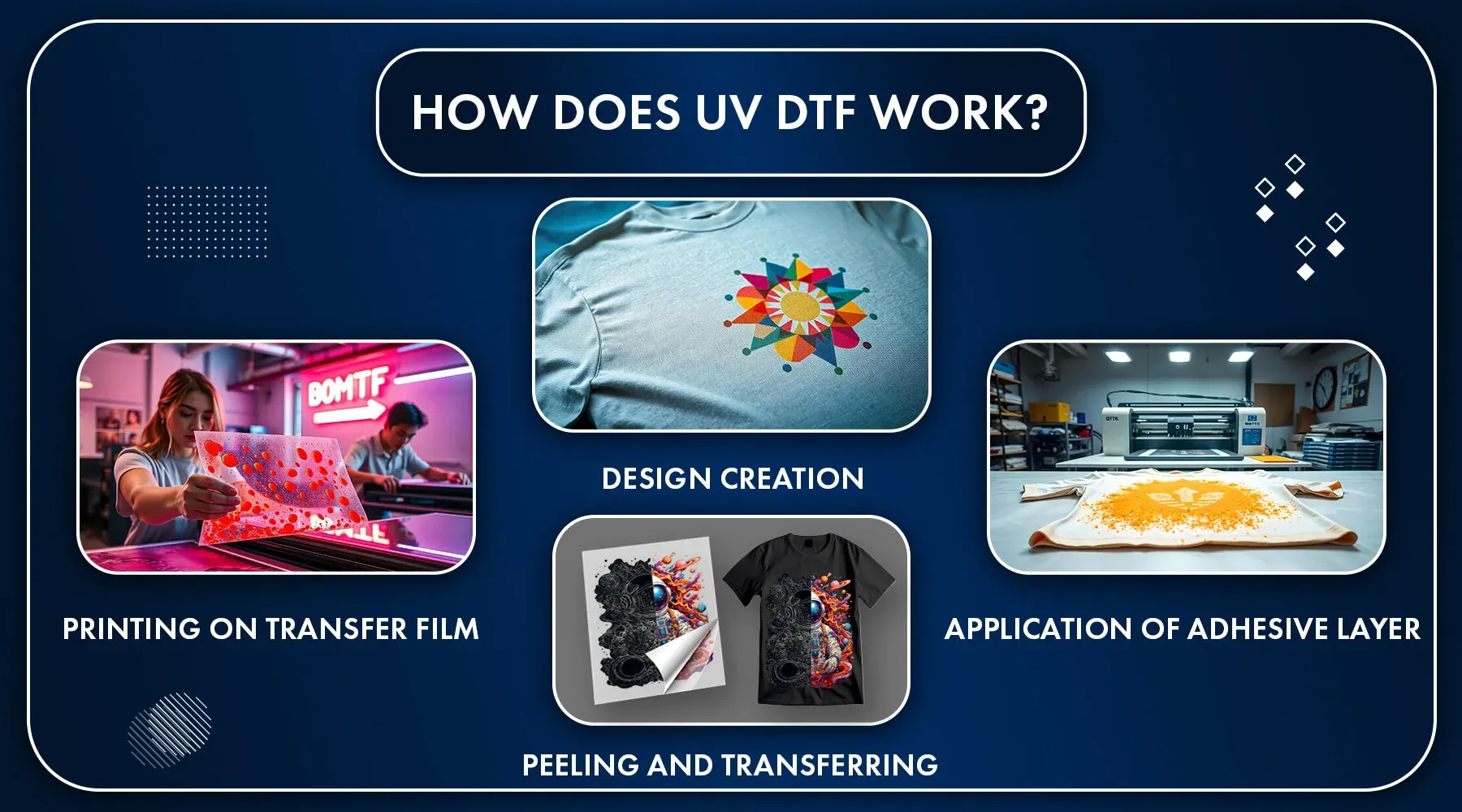
The UV DTF process starts with designing and preparing artwork, ensuring the file is optimized for UV inks and suited for textile transfer. Designers should use vector art or high-resolution raster images and incorporate color management practices that align with UV inks. The next step is printing onto a transfer film with UV-curable inks using a printer configured for UV DTF workflows, then curing the film with UV light to lock in color and reduce tack before transfer.
After curing, the fused adhesive layer—or a UV-stable adhesive on the film—facilitates bonding to the fabric. The transfer then goes under a heat press, with controlled temperature, time, and pressure to create a durable bond. Once cooled, the transfer is peeled away to reveal the finished design. This sequence—design, UV print, cure, transfer via heat press, and finish—highlights how UV DTF merges DTF principles with UV curing to streamline textile transfer processes.
Substrate Compatibility for UV DTF on Textiles
UV DTF transfer works best on common textiles such as cotton and cotton blends, with polyester and poly blends also yielding strong results when cure settings and adhesive layers are tuned correctly. Substrate compatibility depends on the adhesive chemistry and ink formulation, so testing on each new fabric is essential. While some nylons and athletic fabrics can perform well, outcomes vary, making substrate choice a critical factor in predicting durability and color performance.
When evaluating substrate compatibility, perform a small test print to verify adhesion, color accuracy, and hand feel before full production. Consider the impact of heat sensitivity, fabric stretch, and potential edge bleeding on the chosen textile transfer. This careful testing aligns with best practices in textile transfer workflows and helps you compare UV DTF transfer with other methods in terms of substrate performance and finished garment feel.
Best Practices for Reliable UV DTF Transfers
Successful UV DTF transfers start with strong design and color-management practices. Preflight artwork for print readiness, maintain appropriate color profiles for UV inks, and ensure artwork translates well to textile transfer. This stage is where DTF printing and UV printing concepts intersect, and applying robust prepress checks minimizes surprises during production.
A reliable workflow also requires well-tuned cure settings and heat press protocols. Use a stable UV curing system and follow ink manufacturer recommendations for curing times and intensities. Establish standard heat press parameters—temperature, time, and pressure—that balance durable adhesion with fabric integrity. Regular quality control checks, plus clear post-press care guidance for end users, help sustain consistent results across batches.
Troubleshooting Common Issues in UV DTF Transfers
Common challenges include color bleed, misregistration, poor adhesion, white ink opacity problems, and cracking or stiffness in the print. These issues can arise from misalignment during printing, unstable film feeds, inconsistent cure times, or substrate incompatibility. Understanding how UV DTF compares with traditional DTF and direct UV printing helps diagnose root causes, such as adhesive layer mismatch or suboptimal heat press settings.
To address these problems, verify alignment and feed stability, re-cure with calibrated exposure, and adjust heat press parameters to protect fabric integrity. Reassess substrate compatibility and adhesive choices, and perform small test runs before scaling up production. Maintaining a routine of inspection, testing, and iterative tweaks is essential for long-term reliability in UV DTF transfers.
Frequently Asked Questions
How does UV DTF transfer differ from traditional DTF printing and UV printing in terms of process and substrate compatibility?
UV DTF transfer uses UV-curable inks printed to a transfer film and cured before transfer, enabling fast handling and strong color on textiles. Traditional DTF printing relies on standard inks with a powder adhesive and heat cure during transfer, while UV printing applies UV inks directly to a substrate or film. Substrate compatibility for UV DTF is largely driven by ink and adhesive chemistry, with cotton and polyester blends typically delivering the best results.
Which substrates are best suited for UV DTF transfer in textile applications?
Best substrates include 100% cotton and cotton blends, as well as polyester and poly blends, when the adhesive and curing are optimized. Some nylons and athletic fabrics can work too, but always test a small sample for adhesion and color before bulk production.
What heat press techniques optimize UV DTF transfer results?
Use a heat press with adjustable temperature and time. Typical ranges are 150–170°C (302–338°F) for 10–20 seconds with medium to firm pressure, ensuring the UV-cured film adheres without over-pressing. Calibrate for your substrate and adhesive to maximize durability and color fidelity.
Can UV DTF transfer handle white ink underprint and complex multi-color designs as well as traditional DTF printing?
UV DTF transfer can deliver bright colors and sharp details, but white underprint behavior depends on the film and ink system and may require different layering and curing compared with standard DTF printing. For high-color-fidelity textiles, compare white ink opacity and curing between UV DTF and traditional DTF workflows.
How do adhesive layers and transfer films influence substrate compatibility and durability in UV DTF transfer?
Adhesive layers and film compatibility are critical for bond strength and color accuracy. Some films and adhesives work better on cotton than on synthetics; always validate with a small test print and optimized cure settings. Durability hinges on selecting compatible ink, film, and adhesive together with proper heat and cure parameters.
What are common troubleshooting steps for misregistration, color bleed, or delamination in UV DTF transfer on textiles?
Check alignment and ensure stable film feed to prevent misregistration; verify cure times and intensities to avoid color bleed or ink smearing; confirm substrate compatibility and adhesive settings to prevent delamination; perform tests on representative fabrics before full production.
| Topic | Key Point |
|---|---|
| What is UV DTF transfer? | Direct-to-film method using UV-curable inks printed on a transfer film; inks are cured with UV light and transferred to fabrics via heat and pressure, blending DTF with UV curing for durability. |
| How it works (Process overview) | Design artwork; print to transfer film with UV inks; UV cure; apply adhesive if needed; transfer with heat press; peel and finish. |
| Substrate compatibility | Best on cotton and polyester blends; compatibility varies with adhesive chemistry and ink formulation; always perform a test print on sample substrates. |
| Advantages | Vibrant colors and edge detail; reduced smudge risk after curing; durable prints; potentially faster handling times in some workflows. |
| Limitations & considerations | Higher upfront equipment costs; material compatibility; curing and heat settings require tuning; white ink performance considerations. |
| Best practices | Color management; test prints; stable cure settings; standard heat-press protocol; post-press care; quality control. |
| Comparison with other methods | UV DTF transfer uses UV-curable inks on a transfer film (sometimes with UV adhesive) and can cure before transfer; vs traditional DTF (CMYK inks with powder adhesive) and UV printing (inks applied directly to substrate). |
| Troubleshooting | Color bleed or misregistration; poor adhesion; white ink opacity issues; cracking; delamination after washing. |
| Maintenance & long-term care | Regular equipment upkeep; store UV inks and films per manufacturer guidelines; establish SOPs and training. |
Summary
UV DTF transfer is a compelling option for designers and printers seeking vibrant textile graphics with reliable durability and faster handling times. By combining UV-curable inks with a film-delivery approach, this method delivers strong color fidelity across substrates, especially on cotton and polyester blends. Careful test printing, precise curing, and attention to substrate compatibility are essential for success. If you’re already invested in DTF printing or UV printing, UV DTF transfer may fit neatly into your workflow, offering a balance of flexibility, speed, and visual impact that helps you stand out in garment customization. Ultimately, the choice among UV DTF transfer, traditional DTF, or direct UV printing should be guided by production goals, equipment availability, and end-customer needs. With thoughtful setup and ongoing optimization, UV DTF transfer can become a cornerstone technique for durable, eye-catching textile graphics.