

UV DTF transfer has become a popular choice for garment decorators seeking vibrant, durable prints on a wide range of fabrics. This guide compares UV DTF transfer with traditional DTF, helping you decide when to use it and how it fits into your workflow. We also discuss how long prints hold up under typical garment-care conditions so you can plan for longevity. By clarifying what works—through the science of UV-curable inks, adhesive films, and heat-press settings—you’ll be able to optimize results. Whether you’re new to this method or upgrading a small shop, these insights set you up for success with confidence.
In other terms, this approach is a UV-curable ink transfer applied via an adhesive-backed film to textiles. You’ll encounter the phrases UV DTF printing and DTF vs UV printing when comparing methods, performance, and cost across projects. From an LSI perspective, related topics include substrate compatibility, cure times, and post-press care that influence longevity. Choosing the right film, adhesive, and heat settings is essential to maintain crisp edges and color after washing. Care tips for UV DTF transfers offer practical steps to extend the life of your prints.
UV DTF Transfer: Understanding the Technology and Terminology
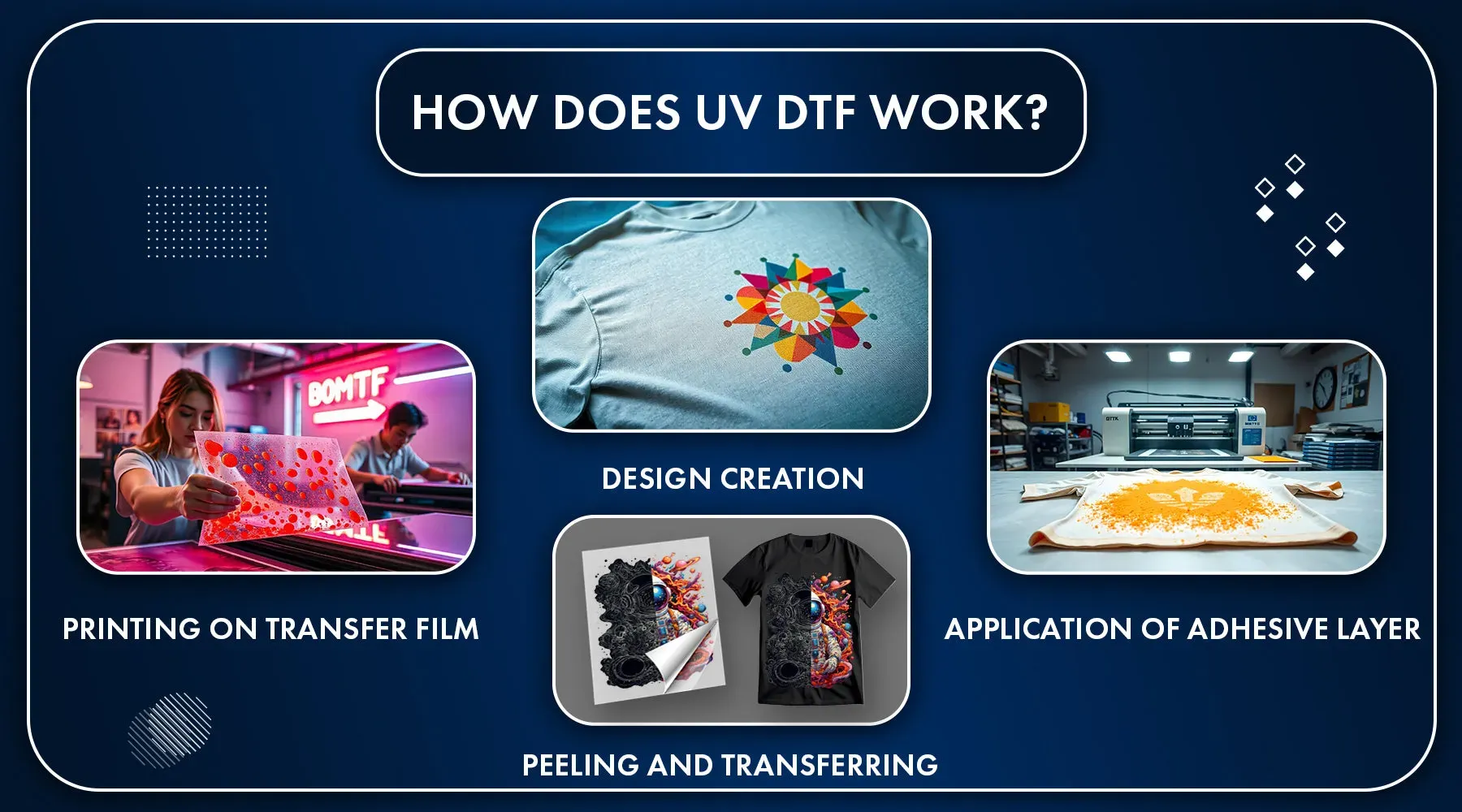
UV DTF transfer uses UV-curable inks applied to a release film, backed with adhesive, and heated onto fabric to produce a high-resolution image. This approach sits in the same family as traditional DTF, but the UV-curable chemistry can offer different color stability and curing behavior that some shops prefer for certain substrates. When people talk about UV DTF printing, they’re often referring to this UV-curable pathway used in DTF workflows rather than a separate direct-to-garment process. Understanding these terms helps set expectations for performance and workflow.
In the broader textile-printing landscape, UV DTF transfer is related to UV printing and other film-based methods. The choice between UV DTF transfer and other UV printing approaches depends on project specifics, fabric type, and production setup. Recognizing the difference between UV DTF transfer and UV printing helps you select materials and processes that maximize durability, edge clarity, and color gamut.
Durability on Fabrics: What Really Impacts UV Transfer Durability
UV transfer durability can be excellent on cotton and many blends when you choose the right adhesive film and curing protocol. Fabric type, ink chemistry, film quality, press temperature, and post-press handling all influence longevity. It’s not a universal solution; some synthetics or textured fabrics may show limitations if heat, dwell time, or pressure aren’t well matched to the substrate. Durability is achievable, but you must tailor the workflow to the material and follow manufacturer guidelines for curing and adhesion.
To reliably maximize longevity, run fabric- and ink-specific tests before large runs and document your settings for future use. When you align the transfer and apply the correct pressure, you reduce the risk of cracking or peeling under regular wear and washing. Pair that with proper post-press care, and UV transfer durability becomes a predictable part of your production toolkit.
UV DTF Transfer vs Other Methods: UV DTF Printing, Traditional DTF, and More
In the UV DTF transfer vs other methods comparison, you’ll weigh the advantages of UV DTF transfer against UV printing and traditional DTF. UV DTF transfers can deliver vibrant color on a broad range of fabrics with strong wash durability when the adhesive film is well-matched to the substrate. UV printing on textiles, by contrast, can be faster for certain runs because you apply ink directly to the fabric without a transfer step, but it may require different fabrics and pre-treatment. The choice depends on volume, fabric type, and end-use requirements, with each method presenting its own set of trade-offs between color gamut, durability, and workflow complexity.
In practice, many shops choose UV DTF transfer for projects requiring precise layering, strong edge definition, and durability on mixed fibers, while others opt for traditional DTF when the production line favors fewer steps. Understanding the nuance between DTF vs UV printing helps you optimize your equipment investments and material selection for consistent results.
How to Apply UV DTF Transfers: Step-by-Step Guidelines for Consistency
How to apply UV DTF transfers starts with prep: pre-press the garment to remove moisture and flatten fibers, then align the transfer with registration marks or a jig. Use the correct heat-press temperature, time, and pressure according to the film and ink supplier guidelines. For many UV DTF workflows, typical settings sit around 300–320°F (150–160°C) for 10–15 seconds with medium pressure, followed by either a hot or warm peel depending on the film. The exact values vary by product, so begin with a test patch to calibrate.
Next, apply a post-press cure if recommended by your ink or film brand to improve adhesion and color stability. Let the garment rest briefly before handling. Use a protective finishing step if offered and ensure you store materials properly to maintain film integrity. Following these steps helps you achieve repeatable results and minimizes a need for re-prints.
Color and Substrate Optimization: Working with Light and Dark Fabrics
Color vibrancy and fabric compatibility are central to optimizing UV DTF transfers. Dark fabrics often require an opacity layer or white underbase to maximize brightness and reduce show-through. Choosing the right adhesive and a film with strong opacity ensures edge sharpness and minimal ghosting on a variety of garments. This is where understanding UV DTF printing versus UV DTF transfer comes into play, because the substrate color interacts with ink chemistry and film translucency to influence final results.
Test on representative samples to confirm how color saturation, texture, and opacity behave on different fabrics. The substrate’s color and texture dictate whether you need more underbase or a higher-coverage film. Regular testing helps you refine your workflow and ensures predictable outcomes across light and dark textiles.
Care Tips for UV DTF Transfers: Washing, Drying, and Longevity
Care tips for UV DTF transfers are essential to maximize longevity. After washing, inside-out garments in cold or warm water and avoiding chlorine bleach can dramatically extend color life and prevent premature wear. Heat exposure should stay within the adhesive’s approved range, and avoid high heat cycles immediately after transfer. Following the ink and film manufacturer guidelines helps protect color vibrancy and adhesion across washes.
Over time, proper storage of transfer films and equipment calibration keeps your process stable. Teach staff and customers how to handle garments post-transfer, including recommended washing and drying practices. With consistent care tips for UV DTF transfers, you can keep graphics looking sharp for many uses, aligning with overall durability expectations.
Frequently Asked Questions
What is UV DTF transfer and how does it relate to UV DTF printing?
UV DTF transfer uses UV‑curable inks applied to a transfer film with an adhesive, then heat‑pressed onto fabric to create a high‑resolution image. UV DTF printing typically refers to applying the same UV‑curable ink technology directly to a substrate or film; the main difference is a transfer film and adhesive versus direct‑to‑fabric printing. Both rely on UV chemistry for color stability and sharp detail.
How durable is UV transfer on different fabrics?
Durability varies with fabric type, adhesive formulation, film quality, heat‑press settings, and post‑press care (UV transfer durability). When paired correctly—for example, on cotton and most blends with suitable adhesive/film and proper curing—UV DTF transfers can be very durable. On some synthetics or nonstandard blends, heat, pressure, or prep issues can cause cracking or peeling, so follow manufacturer guidelines and run tests.
DTF vs UV printing: which is better for textiles?
DTF (direct‑to‑film) uses water‑based inks and a hot‑melt adhesive on a transfer film, while UV printing uses UV‑curable inks applied directly to fabric or substrate. UV DTF transfers can deliver vibrant color, sharp detail, and strong wash durability when properly cured and paired with the right film and adhesive, whereas UV printing offers fast, on‑demand graphics with fewer transfer steps. The best choice depends on fabric type, production volume, and end‑use requirements.
How do you apply UV DTF transfers correctly?
Key steps include: pre‑press the garment to remove moisture; align the transfer using guides or marks; set a heat‑press temperature around 300–320°F (150–160°C) with medium pressure for 10–15 seconds; perform a hot or warm peel per the film’s instruction; apply a post‑press cure if recommended; and let the garment rest before handling. Always run test patches to calibrate color, adhesion, and texture.
Can UV DTF transfers work on dark fabrics, and what underbase is needed?
Yes, UV DTF transfers can work on dark fabrics, but you often need a white underbase or a highly opaque film to achieve bright colors and minimize show‑through. Choose an opacity‑focused film and adhesive, test on representative samples, and adjust for fabric color and texture to ensure strong adhesion and vibrant results.
What care tips help extend the life of UV DTF transfers?
Care tips for UV DTF transfers include turning garments inside out for washing, using cold or warm water, avoiding chlorine bleach, tumble drying on low or air drying, and avoiding high heat cycles immediately after transfer. Follow the ink and film maker’s curing and washing guidelines, and allow an appropriate cure/rest period after pressing to maximize color longevity and adhesion.
| Topic | Key Points |
|---|---|
| What is UV DTF Transfer? | UV-curable inks are applied to a transfer film, backed with adhesive, and heat-pressed onto fabric. This yields a high-resolution, vivid image. It is related to DTF, but uses UV-curable chemistry, which can offer color stability and print quality on certain substrates. |
| Myth 1: UV DTF transfer is always the most durable option | Reality: Durability depends on fabric type, adhesive, film quality, heat-press settings, and post-press care. UV DTF transfers can be very durable on cotton and blends when the correct materials are used, but there is no universal “set-and-forget” solution for all fabrics. Some synthetics or nonstandard blends may crack or peel if heat is too high, press time too long, or prep is inadequate. Tailor workflow to material and follow ink curing, film adhesion, and post-press guidelines to maximize durability. |
| Myth 2: UV DTF printing guarantees flawless results on every fabric | Reality: Visual quality and color fidelity depend on substrate, ink interaction, and adhesive system. Dark fabrics often require a white underbase or lighter underlayer, and highly textured surfaces or polyester-rich fabrics can present ink-saturation/adhesion challenges. Success hinges on choosing the right film, adhesive, and curing settings; UV DTF transfer can yield excellent results, but it isn’t automatic across all fabrics. |
| Myth 3: The process is too complicated for non‑professionals | Reality: It requires attention to detail but is attainable for hobbyists and small businesses. Core steps include pre-press, alignment, correct heat-press temperature/time/pressure, and proper post-press handling. Typical guidelines: around 300–320°F (150–160°C) for 10–15 seconds with medium pressure; follow film/ink guidelines and run test patches before large runs. |
| Myth 4: UV DTF transfers are only suitable for light fabrics | Reality: They can work on many textiles, including dark fabrics, with an appropriate underbase or opacity layer. For dark garments, a white underlay or high-coverage film helps achieve bright colors and reduce show-through. Understand substrate color/texture and test on representative samples. |
| Myth 5: Care and washing will ruin UV DTF transfers quickly | Reality: Proper care extends life. Follow curing and washing guidance; typical care includes turning garments inside out, washing in cold/warm water, avoiding chlorine bleach, and tumble drying on low or air-drying. Avoid very high heat immediately after transfer. With reasonable care, transfers hold up for many washes. |
| How to Maximize Success with UV DTF Transfer |
|
| Choosing the Right Materials for UV DTF Transfer |
|
| UV DTF Transfer vs. Other Methods |
|
Summary
Conclusion: UV DTF transfer represents a dynamic approach to garment decoration, offering vivid color, sharp detail, and solid adhesion under the right conditions. By understanding the myths—such as the belief that UV DTF transfer is always the most durable or that it works perfectly on all fabrics—you can approach this technology with a realistic workflow. With careful selection of materials, adherence to manufacturer guidelines, and thoughtful post-processing care, UV DTF transfer can deliver striking results that compare favorably with other methods like UV DTF printing and traditional DTF. As with any print technology, success comes from testing, documentation, and ongoing optimization tailored to your specific fabrics and production environment. If you follow best practices and stay informed about material innovations, your UV DTF transfer projects can be both visually impressive and durable enough for everyday wear.