

UV DTF Transfer has redefined how designers approach custom apparel and other substrates, delivering vivid colors, strong adhesion, and dependable performance across fabrics. As a newcomer to the world of alternative printing, you’ll discover why this method blends digital precision with practical bonding, predictable results, and scalable production, making it approachable for both solo creators and small shops. With UV DTF prints, designers gain a bold color gamut and sharp detail that elevate designs on cotton, blends, and even certain synthetics, while offering consistent results across run sizes and materials. Careful preparation, proper inks, and a reliable curing process help ensure long-lasting results that stand up to repeated washing, with clear guidelines for prepress, curing dose, and post-press handling. For practical guidance on how to perform UV DTF transfer, this guide outlines steps, materials, and best practices to get professional results, along with troubleshooting tips and recommended workflows for different fabrics.
Another way to frame this process is as a UV-curable ink system printed onto a transfer film, which is then activated on fabric with heat and pressure. From an information-seeking perspective, it resembles a digital-to-film workflow, where imagery is designed on screen, fixed onto a carrier, and bonded to textiles. This alternative terminology highlights substrate compatibility, color richness, and the durability that researchers often describe as long-lasting color retention across washes. Practically, focus shifts to preparation steps, adhesive behavior, and precise timing and pressure settings to achieve consistent, repeatable results. By using related concepts such as transfer film, coating, and curing, readers can connect UV DTF techniques to broader textile printing methods.
What is UV DTF Transfer and Why It Delivers Bright Colors
UV DTF Transfer refers to a digital printing workflow that uses UV-curable inks to print directly onto a transfer film, which then bonds to a substrate via heat and pressure. The ink cures instantly under ultraviolet light, producing sharp lines, rich color, and strong adhesion. The Direct-to-Film (DTF) approach means you’re printing a complete image onto a film designed to carry an adhesive layer that ultimately bonds to the final surface. The result is a vibrant, durable print that can transfer to a wide range of textiles and other materials.
This method is known for its color vibrancy and reliability. With proper curing and bonding, UV DTF transfers deliver durable prints that resist cracking, fading, and washing wear. The process also supports substrate versatility, working across cotton, blends, and some synthetics when prep and curing are optimized, making it a flexible option for designers seeking bold, long-lasting results.
UV DTF Prints vs Traditional Methods: Strength, Details, and Longevity
UV DTF prints stand out for their vibrant color range, broad gamut, and strong saturation that help designs pop on fabrics and other materials. The direct-to-film workflow captures fine lines and subtle gradients with crisp definition, offering detail that rivals other digital methods.
Durability is a core advantage when the process is executed correctly. Proper curing and bonding yield prints that resist cracking, fading, and wash wear better than some traditional methods. This combination of vivid color, sharp detail, and substrate versatility makes UV DTF prints a compelling option for apparel and hard-wearing textiles alike.
How to Perform UV DTF Transfer: A Practical Step-by-Step Guide
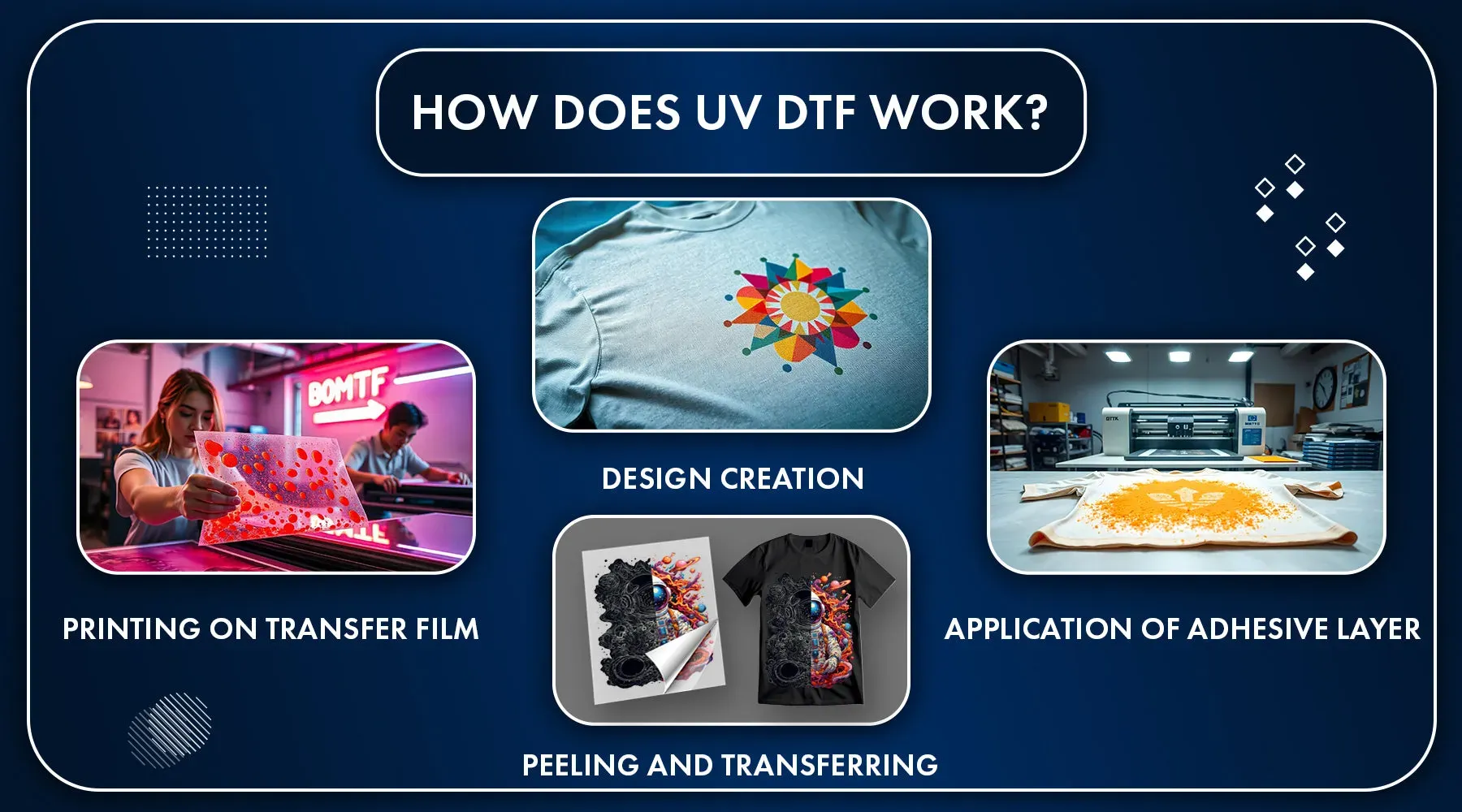
Design and color management set the foundation. Create artwork at high resolution (at least 300 dpi at the intended print size) and use ICC profiles appropriate for UV inks and your substrate to preserve color accuracy. Consider separating white or light areas when printing on dark fabrics. Understanding how to perform UV DTF transfer begins here, with a color-managed workflow that translates from screen to film to final textile.
Next, print to the transfer film, ensuring adequate opacity for white or light areas as needed. Cure the printed film with your UV curing system according to ink recommendations. Then prepare the substrate (clean, dry, and flat), align the transfer, and bond with a heat press through controlled timing and pressure. A post-press cure and a careful cooling phase complete the durable bond, followed by inspection for bubbles or misalignment.
Choosing the Right Materials: UV DTF Inks, Films, and Adhesives
Selecting the right materials is essential for maximizing vibrancy and durability. UV DTF inks determine color vibrancy, white opacity where required, and wash-fastness. Pair these inks with a stable transfer film that provides uniform bonding and an adhesive layer that adheres reliably during heat application.
Substrates matter, too. Natural fibers like cotton perform well, but blends and some poly-based fabrics can work with proper prep and curing. For those starting out, a starter kit that includes tested inks, films, and curing equipment can help you evaluate performance before scaling up and seeking the best UV DTF inks for your workflow.
Optimizing White Underbase and Color Management for Dark Fabrics
When printing on dark fabrics, a well-planned white underbase is crucial to preserve color integrity and opacity. The underbase establishes a solid foundation for vibrant UV DTF prints, preventing dull tones and ensuring faithful reproduction of bright colors across the design.
Effective color management, including the use of ICC profiles and a color-managed workflow, helps translate screen designs to film and then to fabric with accuracy. High-resolution artwork, careful calibration, and consistent substrate prep all contribute to durable prints that maintain depth and detail after multiple washes.
Curing, Bonding, and Post-Treatment Care for Durable UV DTF Prints
A precise curing process is essential for durability. Ensure the UV dose matches the ink manufacturer’s recommendations to achieve strong adhesion and long-lasting color fastness. Inadequate curing can lead to weaker bonding, color bleed, or premature cracking, undermining the durability of UV DTF transfers.
Post-treatment care supports longevity. Follow washing guidelines, such as cold washing and turning garments inside out, and avoid high-heat drying when possible. A light post-press cure can further reinforce the bond, and periodic re-pressing on stressed areas helps maintain the print’s vibrancy and durability over time.
Frequently Asked Questions
What is UV DTF Transfer and why use UV DTF prints on textiles?
UV DTF Transfer is a digital printing workflow that uses UV-curable inks printed on a transfer film and then bonded to a substrate with heat and pressure. This approach yields UV DTF prints with bright color, sharp detail, strong adhesion, and durable prints on fabrics like cotton and blends, and even some synthetics.
How to perform UV DTF transfer on fabric?
Design artwork with high resolution and color management; print to the transfer film with your UV DTF printer, ensuring opacity where needed; cure the printed film with a UV system; prepare the substrate (clean, dry, flat); align and bond the transfer using a heat press; perform any recommended post-press cure and allow to cool.
What makes UV DTF prints vibrant and durable across substrates?
UV DTF prints stand out due to the wide color gamut of UV inks, crisp detail from the direct-to-film process, and a strong bond to the substrate when properly cured. The result is vibrant, durable prints that resist cracking and fading on many fabrics.
What are the best UV DTF inks for durable prints and color fidelity?
Choose UV DTF inks from reputable brands that offer strong color, reliable white opacity where needed, and good wash-fastness. Ensure the inks are compatible with your printer and transfer film/adhesive system, and test a small batch to confirm durability of UV DTF prints.
What factors influence curing for UV DTF transfer to maximize durability?
Key factors include achieving the recommended UV dose for the inks, even curing across the print, correct temperature and time during bonding, and proper substrate prep. Inadequate curing or uneven heat can reduce adhesion or cause color variation in UV DTF transfer.
How should I care for UV DTF prints to maintain durability and vibrancy?
Follow washing guidelines (cold/warm gentle cycles), turn garments inside out, avoid high-heat dryers, and store away from direct sunlight. If needed, re-press with light heat to refresh the bond and maintain durable prints.
| Key Point | Summary |
|---|---|
| What is UV DTF Transfer | Digital printing workflow that uses UV-curable inks printed onto a transfer film, then bonded to a substrate via heat and pressure. It yields sharp lines, rich color, and strong adhesion across a wide range of fabrics and materials. |
| Why UV DTF Prints Stand Out | Vibrant color range, crisp detail, and durability. The direct-to-film approach supports a wide gamut and strong saturation, with good adhesion and resistance to cracking or fading when properly cured. Works on many substrates with proper prep. |
| Core Components | UV DTF inks; transfer film; adhesive layer; suitable substrates (cotton, blends, some synthetics); curing/heat equipment for bonding and curing. |
| Preparing for UV DTF Transfer | Calibrate color profiles, prep substrates (cleanliness, moisture control), use a color-managed workflow, and consider underbase coverage for opacity on dark fabrics. |
| Step-by-Step Guide (Overview) | Design with high resolution and color management; print to transfer film; cure the ink; prepare the substrate; apply the transfer with heat/pressure; post-press cure if needed; cool and inspect. |
| Tips for Best Results | Plan for underbase on dark fabrics; use high-resolution artwork; prep substrates thoroughly; ensure proper UV curing dose; provide care instructions to end users for durability. |
| Common Pitfalls | Inadequate curing, misalignment, ink bleeding, and uneven bonding. Mitigate with proper curing guidelines, registration marks, precise pre-press alignment, and even pressure. |
| Durability and Care | When properly cured and bonded, UV DTF prints resist washing and daily wear. Follow washing care, turn garments inside out, and avoid high heat; re-press if needed. |
| Choosing Inks and Equipment | Select reputable UV DTF inks; ensure printer and curing system are compatible; consider starter kits to test substrates, films, and curing equipment before scaling. |
Summary
Conclusion: UV DTF Transfer is a versatile and color-rich method for producing durable prints on textiles and other substrates. By mastering UV-curable inks, high-resolution printing, precise bonding with heat and pressure, and proper substrate preparation, you can achieve professional-grade UV DTF transfers that withstand regular washing while preserving vibrant color and sharp detail. With the right inks, film, and process settings, you’ll streamline production, improve repeatability, and deliver bold, long-lasting UV DTF transfers that wow customers.