

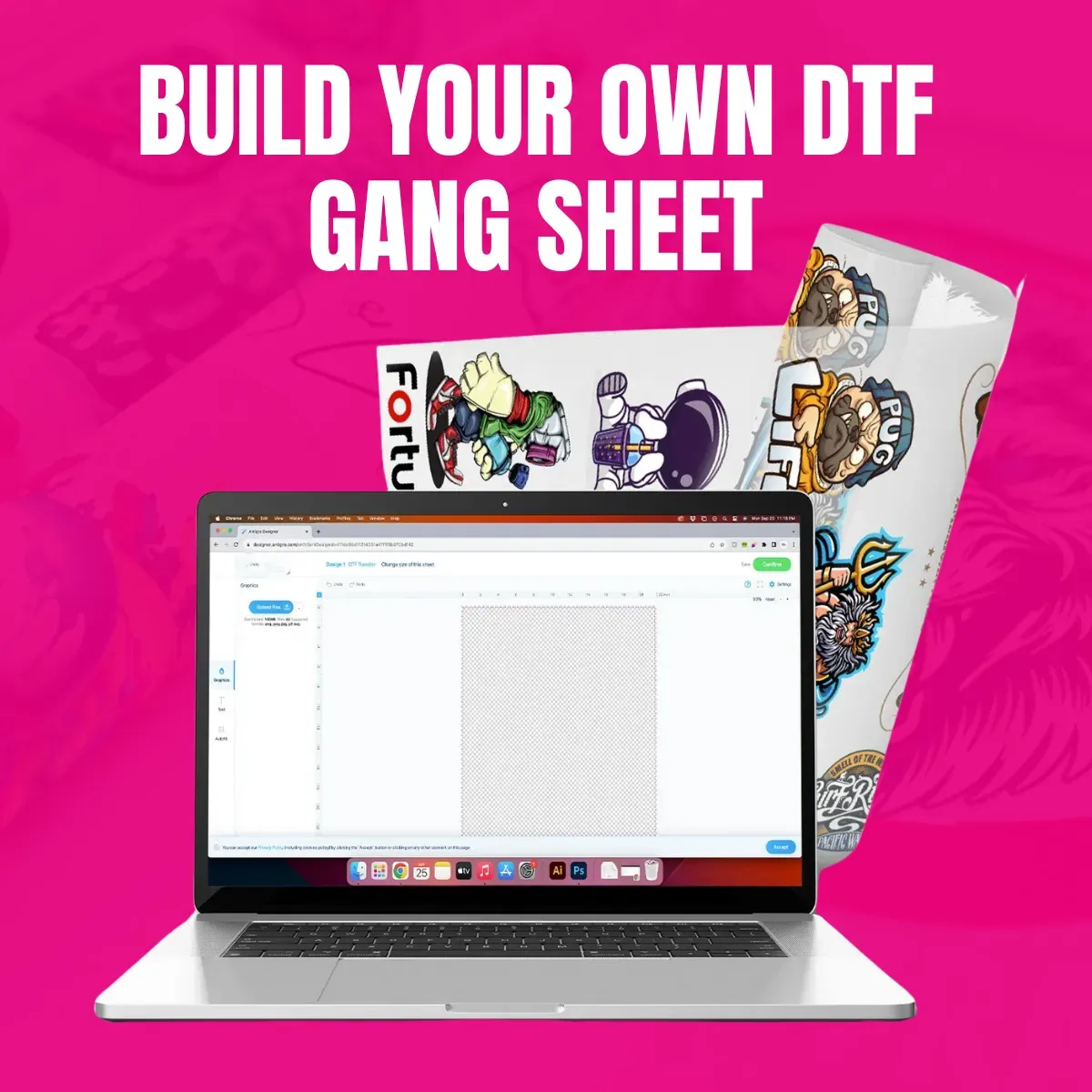
DTF Gangsheet Builder is transforming how apparel shops plan every print run, giving teams a clear roadmap for packing designs efficiently and reducing material waste from the very first design to final transfer, enabling smoother scaling across multiple product lines and seasons. This dedicated tool helps you lay out, nest, and optimize multiple designs to maximize film usage, boosting DTF production efficiency across diverse orders and fabric types. Whether you’re focused on DTF printing or garment printing, the software’s gangsheet layouts guide you to pack designs tightly without sacrificing color accuracy or margins. By shortening setup times, improving color management, and promoting repeatable templates, it directly supports print run optimization and consistent results on every sheet, from small custom orders to large catalogs. With built-in validation, previews, and export-ready data, you can scale operations confidently, achieving reliable throughput, reducing reprints, and driving higher profitability for your clothing line across seasons and global markets.
Viewed another way, the DTF Gangsheet Builder acts as a layout optimizer for digital garment transfers, turning artwork into space-efficient print sheets through intelligent nesting algorithms. It helps production teams plan print runs with precision, aligning designs, color channels, and safe margins to minimize waste and downtime. In essence, this tool serves as a digital workflow enabler, bridging design, RIP data, and printers with export-ready gangsheet information and metadata for reproducible results across orders and seasons.
DTF Gangsheet Builder: The Engine Behind Efficient Print Runs
In today’s competitive world of garment printing, efficiency and accuracy are as important as print quality. The DTF Gangsheet Builder stands as the central tool that helps you lay out multiple designs on a single film, maximizing the value of every production run. A gangsheet is a single sheet that holds multiple designs arranged to optimize space on the film before transfer, enabling consistent color and reliable transfers across designs.
Built for DTF printing and garment printing, the builder uses flexible gangsheet layouts and nesting to achieve faster throughput. By generating export-ready gangsheet files that integrate with RIPs and DTF printers, you improve DTF production efficiency and speed up print run optimization.
Maximizing Print Run Optimization Through Smart Layouts
The economics of DTF printing hinge on sheet utilization. When you optimize how designs are packed on a single sheet, you reduce material waste, lower substrate costs, and speed up setup times for dozens or hundreds of items. The DTF Gangsheet Builder helps maximize design density on each sheet through a flexible layout engine and grid snapping that keeps designs aligned and non-overlapping.
Leverage batch processing and repeatable templates to reuse proven layouts across future runs. Nesting, margins, and rotation options empower you to place designs efficiently, even as sizes and orientations vary across garments.
DTF Printing Efficiency: Reducing Waste with Color Management
DTF printing efficiency hinges on how well you use the sheet. A well-designed gangsheet reduces material waste, lowers substrate costs, and speeds up the overall print run, all while maintaining consistent color and transfer readiness. The builder’s color-channel mapping and margin controls help ensure predictable ink usage across all designs on the sheet.
Color management is central to reliable transfers. Exporting color profiles, validating separations, and performing on-screen proofs helps ensure consistent density across designs on different fabrics. This attention to color accuracy is a key driver of DTF production efficiency, especially when handling tricky reds or skin tones.
Color Management and Consistency Across Garment Printing
Color consistency is critical in garment printing. A robust DTF workflow uses color management, channel mapping, and proofing to keep tones stable from design to transfer across cotton, blends, and dark fabrics.
Proofing steps and color profiles help prevent unexpected shifts on screen compared to the final transfer. When you verify results before printing, reprints drop and overall workflow efficiency improves.
Gangsheet Layouts, Nesting, and Margin Control for Accurate Transfers
Gangsheet layouts and substrate-aware nesting let you optimize for a range of garment sizes on a single sheet. Margin and bleed control ensures designs stay within safe print areas, preventing edge clipping during transfer and maintaining crisp edges.
Tips for practice include rotating designs to minimize gaps, grouping by garment type to reduce ink color changes, and saving templates for recurring catalog groups. This approach aligns with print run optimization and minimizes waste across orders.
From Concept to Delivery: Workflow, Validation, and Integration
From design concept to finished transfer, the workflow spans design, layout, rip export, and print. After finalizing a gangsheet, export the layout and metadata for your RIP or DTF printer so you can reproduce the same sheet in future runs.
Validation, proofing, and quick cross-checks help catch overlaps, margins, and scale issues before printing. By avoiding common pitfalls like missing bleed or misalignment, you maintain high DTF production efficiency and deliver consistent results across orders.
Frequently Asked Questions
What is the DTF Gangsheet Builder and how does it improve print run optimization in DTF printing?
The DTF Gangsheet Builder is a dedicated tool that lets you lay out, nest, and optimize multiple designs on a single gangsheet. It directly improves print run optimization and DTF production efficiency by maximizing design density on each sheet, reducing waste, speeding up setup, and producing export-ready gangsheet data for RIPs and DTF printers.
How do gangsheet layouts contribute to garment printing efficiency?
Gangsheet layouts maximize film usage by packing designs on one sheet, which lowers material costs, reduces reprints, and helps maintain consistent color management across all designs printed on the sheet.
What features should I look for in a DTF Gangsheet Builder to ensure margins, bleed, and color accuracy?
Look for a flexible layout engine with grid snapping, margin and bleed control, color management and channel mapping, substrate-aware nesting, batch templates, export compatibility, and robust validation and proofing to catch overlaps and spacing issues before printing.
How can templates and repeatable layouts boost DTF production efficiency across different garment sizes?
Templates and repeatable layouts enable you to reuse proven gangsheet layouts for multiple runs, align designs for various garment sizes, reduce setup time, maintain consistent margins and color, and improve overall throughput.
What is a typical step-by-step workflow with a DTF Gangsheet Builder from design import to export?
A typical workflow: gather designs and specs, define sheet size and margins, import designs and set a consistent scale, optimize layout with nesting, assign color channels and print order, validate margins and bleed, preview and proof, then export for production with metadata for RIPs.
How do you integrate a DTF Gangsheet Builder workflow with RIPs and production systems?
After finalizing a gangsheet, export the layout and metadata in formats compatible with your RIPs and printers, verify color profiles, and hand off to the RIP/workflow. Use templates and proofing to maintain DTF production efficiency and avoid misprints.
| Aspect | What it means | Why it matters |
|---|---|---|
| DTF Gangsheet Builder | A tool to lay out, nest, and optimize multiple designs on a single sheet to maximize space, ensure color consistency, and accelerate production. | Increases efficiency, reduces waste, and enables predictable throughput across jobs. |
| Gangsheet benefits for DTF printing | Maximizes sheet utilization, lowers per-item costs, speeds up setup, and helps maintain consistent color density. | Economic advantage and print quality consistency across runs. |
| Core features to look for | Flexible layout, margin/bleed control, color management, substrate-aware nesting, batch processing, export compatibility, validation/proofing. | Directly addresses production realities and quality assurance. |
| Step-by-step guide | Gather designs; define sheet size; import/scale; nest; map color channels; validate margins; preview; export; review/finalize. | Provides a repeatable workflow reducing errors. |
| Tips for minimizing waste | High-density layouts; strategic rotation; group by garment type; templates; plan for future orders; consider substrates. | Improves throughput and reduces waste and setup time. |
| Color management and QC | Maintain uniform color density across designs; verify color profiles; use proofing to compare expected vs actual. | Ensures color accuracy across fabrics. |
| Garment sizes | Substrate-aware nesting simulates placement across sizes to minimize reprints. | Prevents misfit and wasted space on varied sizes. |
| Exporting and workflow | Export layout plus metadata for RIP/printer; integrate with existing workflow for smooth handoffs. | Reduces errors and speeds throughput. |
| Practical scenario | 50-design run example showing end-to-end workflow from nesting to proof to export. | Illustrates real-world benefits and process flow. |
| Common pitfalls | Ignoring margins/bleed; overloading sheets; poor color management; inconsistent templates. | Avoids reprints, color issues, and delays. |
Summary
DTF Gangsheet Builder is a transformative tool for modern garment printing, designed to plan, nest, and optimize multiple designs on a single gangsheet. It helps you maximize material efficiency, maintain consistent color density, and accelerate setup and yield across runs. With features like flexible layout, margin control, color management, substrate-aware nesting, batch templates, and export-ready data, the DTF Gangsheet Builder supports a repeatable, error-free workflow from design to production. By promoting accurate previews, validation, and metadata export, it reduces waste, minimizes reprints, and delivers predictable timelines, making it easier to scale up your print operations while preserving quality. Adopting the DTF Gangsheet Builder can improve throughput, consistency, and profitability for shops handling varied garment sizes and complex catalogs.