

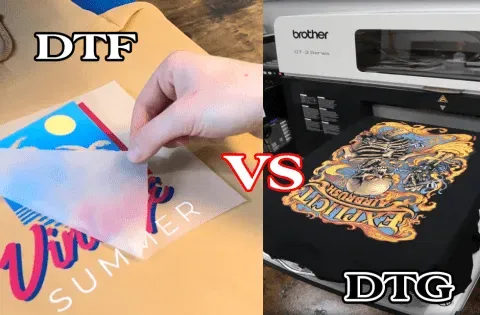
DTF vs DTG is a hot topic for apparel brands and print shops, because each method promises different strengths across color, durability, and cost, and because shop workflows vary. DTF printing advantages are often cited for versatility and lower setup costs, while DTG printing pros and cons hinge on soft hand feel and detailed color on cotton, in practice today. When considering DTF vs DTG durability, many operators note that DTF transfers with a protective topcoat tend to resist cracking on diverse fabrics. In a cost comparison DTG vs DTF, upfront investment and ongoing material costs vary, and DTG often demands more maintenance and pretreatment while DTF can offer lower per-unit costs for mixed runs. Color vibrancy DTG vs DTF is frequently the deciding factor for graphic-heavy designs, with each method delivering different saturation and edge sharpness depending on fabric and curing.
Beyond the core terms, researchers and buyers often explore the same ideas using alternative terms that reflect technology, process, and outcomes. Think of film-to-fabric transfers versus direct-to-textile printing, where the emphasis shifts from substrate prep to pigment adhesion and cure. LSI-friendly language also includes mentions of pigment transfer systems, protective topcoats, and multi-fabric compatibility to capture related queries. Explaining the same comparison through terms like white underbase, soft hand feel versus crisp edges, and wash durability helps readers grasp the tradeoffs without relying on acronyms. The goal is to map semantic connections so search engines recognize the topic from multiple angles while guiding readers to informed production decisions.
DTF vs DTG: Understanding Core Differences in Garment Printing
DTF (direct-to-film) and DTG (direct-to-garment) use different delivery methods for ink on fabrics, which leads to distinct production workflows, costs, and results. DTF relies on printing pigment onto a PET film, which is then heat-sealed to the garment. This approach offers strong versatility across fabric types and darker garments, with broad substrate compatibility.
DTG, by contrast, prints ink directly onto the fabric and can deliver excellent color reproduction and a soft hand feel on light-colored cotton when cured correctly. A key decision factor is color vibrancy DTG vs DTF, which varies by design, fabric, and process; DTF can excel on dark fabrics while DTG shines on white or pale shirts.
DTF Printing Advantages for Multi-Fabric Runs
DTF printing advantages include broad fabric compatibility, robust adhesion, and less sensitivity to garment color, making it well suited for mixed-fabric runs. The transfer film adheres well to cotton, poly blends, and even some synthetics, which is why many shops prefer DTF for diverse lineups.
This versatility supports faster setup and can reduce retooling between designs. For projects that require consistent saturation across light and dark garments, the DTF printing advantages shine by maintaining color fidelity and edge sharpness across fabrics.
DTG Printing Pros and Cons for Premium Cotton Garments
DTG printing pros and cons emphasize ultra-soft hand feel and high color fidelity on white or light fabrics, with detailed gradients and photographic imagery when conditions are ideal. The main drawback is additional steps and costs for dark shirts, including pretreatment and white underbase.
As a result, DTG color vibrancy on light fabrics tends to be strong, while darker garments can require more processing and may produce less consistent saturation. When evaluating color vibrancy, DTG vs DTF often shows DTG delivering more nuanced shading on white tees, while DTF delivers bold saturation across a wider range of backgrounds.
Durability and Washability: DTF vs DTG Performance Across Fabrics
DTF vs DTG durability is a common concern, and results depend on substrates, curing, and topcoat application. DTF transfers benefit from a protective topcoat and the film-based layer, which generally resist cracking and fading across dark and synthetic fabrics.
DTG durability relies on proper pretreatment, ink chemistry, and curing, and can deliver durable results on compatible fabrics. In practice, DTF often shows stronger long-term durability across mixed fabrics and repeated wash cycles, making it a solid option for versatile wardrobes.
Cost and Efficiency: Cost Comparison DTG vs DTF and Lifecycle Impacts
Cost comparison DTG vs DTF involves upfront hardware costs, consumables, and ongoing maintenance. DTG printers typically require higher initial investment and ongoing expenses for pretreatment, maintenance, and specialty white inks, while DTF equipment and films tend to be cheaper per unit and easier to source for small-to-mid runs.
For shops prioritizing flexibility and volume, the lifecycle costs may favor DTF for mixed-fabric campaigns, with DTG reserved for premium cotton lines where ultra-soft hand feel matters. A hybrid approach—DTF for most materials and DTG for high-end cotton pieces—often delivers the best balance of speed, cost, and quality.
Frequently Asked Questions
DTF vs DTG color vibrancy: which method delivers better color vibrancy across light and dark fabrics?
DTG excels on light fabrics with rich gradients and a soft hand when pretreatment and curing are correctly done. DTF maintains strong color saturation across many fabrics, including darks, thanks to pigment-on-film and a protective topcoat. Practically, DTG shines on whites; DTF often delivers more consistent vibrancy on dark fabrics.
DTG printing pros and cons: how do they compare to DTF printing advantages?
DTG offers ultra-soft hand and excellent gradient color reproduction on cotton-rich fabrics, but it requires pretreatment, underbase on dark fabrics, and has higher upfront costs. DTF provides broad fabric compatibility, a simpler workflow, and typically lower per-unit costs for small to mid runs. If your designs use diverse materials, DTF can be advantageous; DTG remains strong for premium cotton prints.
DTF vs DTG durability: which lasts longer in real-world washing cycles?
Durability depends on fabric and cure quality. DTG can be very durable on properly pretreated cotton, but poor pretreatment or insufficient curing can reduce wash resistance. DTF transfers, with a protective topcoat, often offer strong wash durability across a wide range of fabrics, including darker garments.
Cost comparison DTG vs DTF: which approach offers lower per-unit costs for mixed fabric runs?
DTG typically involves higher upfront investment and ongoing maintenance, which can raise per-unit costs for small runs. DTF usually has lower initial equipment costs and cheaper consumables, providing competitive per-unit costs for mixed fabrics; large cotton-dominated runs may tilt the economics toward DTG.
DTF printing advantages: what makes DTF a versatile option across fabrics compared to DTG?
DTF printing advantages include broad fabric compatibility and simpler pre-treatment workflows, plus solid adhesion on dark garments. DTG remains ideal for 100% cotton with soft hand and high-detail gradients, but DTF’s versatility makes it a strong choice for multi-fabric product lines.
| Category | DTF | DTG |
|---|---|---|
| Print quality & color vibrancy |
|
|
| Fabric compatibility & feel |
|
|
| Durability & washability |
|
|
| Cost & scalability |
|
|
| When to choose (practical scenarios) |
|
|
| Color & detail handling |
|
|
| Practical tips for brands & shops |
|
|
| FAQ: quick take |
|
|
Summary
DTF vs DTG: A quick glance shows that each method serves different production goals. DTF offers versatility across fabrics, strong durability, and cost efficiency for smaller to mid runs, with sharp edges and vibrant colors on many substrates. DTG delivers exceptional color fidelity and soft hand on cotton-rich garments, especially on light-colored fabrics, though it can require pretreatment for darks and higher upfront investment. The best choice often lies in a hybrid approach: use DTF for mixed fabrics and dark garments, and DTG for premium cotton lines and photo-grade imagery. Testing, workflow planning, and a clear understanding of order mix will help you align your strategy with customer needs and operational realities.